Skip to content
    • About
    • Contact

The Purpose Driven Date

  • Is our “Standard of Living” rising faster than our Standard of Living?

    October 20th, 2024

    Louis CK made a joke titled, “Everything is Amazing, and Nobody is Happy.” He recounts a flight where they announced Wi-Fi would be offered on an experimental basis for the first time. 

    A man pulls out his laptop and gets to work. Thirty minutes into the flight, the Wi-Fi goes out, and the guy says, “What the %$53? This is ^#% *$#!.” A half hour before, the guy did not know Wi-Fi was possible on flights. 

    Now, he is entitled to it forever more. Or so the joke goes… 

    When I went on a mission trip to an isolated rural village in the Dominican Republic when I was 16 years old, it was my first experience of so-called third-world poverty, and it opened me up to a question I have struggled with for the last 16 years. 

    Are all the problems we deal with in the developed world trivial? You know, the famous joke about “first-world problems.” I’m not exaggerating to say that it has been an obsession and has haunted me ever since.

    The simple answer is No. 

    We may not deal with inescapable poverty, constant food/physical insecurity, and the absence of basic healthcare/education/electricity/transportation (and so on), but there are many legitimate problems. There is still cancer, drug addiction, homelessness, gun violence, and domestic/sexual abuse (among many others) that anyone would consider a “problem.”

    Still, in the developed world, more people are more comfortable, live longer, and have more opportunities than people in underdeveloped countries. And it’s by a wide margin. 

    Not only those in underdeveloped countries but what about those who came before us. I don’t know many people who would go back in time, even if it were as a monarch. Kings and Queens of the past lived shorter, more violent, less educated lives than many poor people live today.

    I know what you are saying. “Of course, Connor. Everyone in our society knows this, is super-grateful for all we have, and accepts that we are in a Utopia. Unending, blissful joy abounds.” Ha.

    Obviously not. Expecting people to be that way misunderstands the human brain.

    Our brains are wired to scan the environment for threats, track our relative social position in society, and take what we have for granted. In other words, we are stuck with anxiety, comparing ourselves to others, and entitlement. Regardless of our environment.

    But, the more I think about this problem, it’s actually worse than that.

    In the internet age, we have access to more facts and information than ever before. But, hardly anyone would say we are better informed than before. 

    Confirmation bias is a powerful drug. We choose to look up information that supports our beliefs and ignore information that contradicts them. The internet has supercharged this bias. Making us more uninformed than before.

    If confirmation bias is exploding, maybe some others are too.

    I have had many conversations over the past few years that are just plain bleak. So many people are convinced the world is going to hell, the economy is worse than ever, and the ‘American Dream’ is dead.

    People point to ongoing global wars, elevated housing prices screwing the younger generation, Climate Change, and rising student debt, among other things—all legitimate problems.

    Many see these issues as justification for not having children. How could you bring a child into such a terrible world? Also, very legitimate. It’s a tough and harsh world.

    However, relative to underdeveloped countries and historical life, life has never been as comfortable. Most children born today have so many advantages that others never had. So what is really going on?

    Anxiety, Social Comparison, and Entitlement cognitive distortions likely suffer from the same supercharging from the internet as confirmation bias. Bad news sells. And it’s everpresent. Social Media keeps us comparing ourselves to ridiculous standards of beauty and happiness. We are bombarded by the lifestyles of the rich and famous.

     Despite the increasing comforts, this makes life in the developed world much worse than before. It’s why we are all nostalgic for the 90s.

    Our image of the good life is becoming unmoored from reality. And the gap is accelerating.

    Peter Attia’s excellent podcast with the happiness researcher Arthur Brooks gave me great insight into the solution. Our happiness comes down to limiting our desires to only the most essential. We must reframe our image of the good life to something that is both realistic and beautiful.

    Life Update: My amazing grandmother, Mary Daly, passed away a couple of weeks ago. Her funeral was a powerful celebration of her life. Permit me to share some excerpts of her obituary as she enjoyed reading my blog. Here is a link as well.

    “Mary Hannah Bowler Daly was born in New York, New York, on June 30, 1932, to Michael and Margaret Bowler. She had three siblings who recently predeceased her: Bernadette Lavin, Patricia Frain, and Michael Bowler. She was raised in the Bronx and attended St. John Chrysostom School and Cathedral High School. After graduation, she became a secretary at Deloitte Haskins and Sells in Manhattan. 

    Mary met her husband, John “Jack,” in third grade, but it wasn’t until after she graduated from high school and started working that they became an item. John enlisted in the Navy, and after completing his service commitment, they were married on June 11, 1955. They lived in New York City, Webster, and Rochester in New York and eventually moved to Lanham, Maryland, outside of Washington, D.C. Along the way, they had seven children: John (Lori) Daly, Michael Daly, Robert (June) Daly, William (Kim) Daly, James Daly, Maureen (Jeff) Branham, and Jeanne (David) Smith.

    Mary was an important part of St. Margaret Mary Parish. She and Jack were instrumental in the Parish Retreat Program, the Cursillo movement, and Alpha-Peer Ministry. She volunteered on committees and served in many church ministries. 

    Mary believed in the importance of education. She ensured all her children earned their college degrees, and when her youngest was in third grade, she pursued her own higher education journey. She went to Seminole Community College, now Seminole State, and then out to FTU, now known as UCF. She earned a bachelor’s degree in business and then a master’s degree in counseling and became a Licensed Mental Health Counselor. She worked at BETA and Lakeside Alternatives and eventually had her private practice for over fifteen years.”

  • False Dawn: The Internal vs External Journey

    September 29th, 2024

    A few weeks ago, My brother and I watched CODA (spoilers ahead), the Oscar winner in 2021. I was shocked to find an extremely formulaic film. The Oscars usually reward films that subvert the traditional formula in some artsy way.

    CODA may have followed a familiar storytelling pattern. Still, it hit all the right notes and had me thinking about the fundamentals of a good story: The push and pull between the internal and external world.

    The story follows Ruby—a not-so-popular high school student who is the only member of her family who is not deaf. Her family works a fishing boat for income and depend on her to translate their sign language and navigate the politics of the fishing business.

    But she has a secret. She can sing. Like, really belt it.

    She is unaware of her talent because her family can’t hear her when she sings, and she is generally self-conscious because her family situation delayed her speaking abilities.

    She accidentally stumbles into the school’s choir practice, and the teacher quickly hears her talent. She is signed up to sing a duet with a boy-toy love interest. At first, she is genuinely happy to add a new passion to her life.

    However, good times don’t last. 

    Soon, her family is frustrated because they can’t rely on her during a turbulent time in the fishing business because she is spending time singing. Her love interest betrays her by spreading an embarrassing story about her family. The choir teacher is frustrated by her poor attendance record.

    The tension builds between her increasingly separate lives. Just when it feels unbearable, her love interest convinces her to give him another chance, and they share a beautiful afternoon at the lake. It ends with a kiss on top of a log. 

    As a viewer, I felt that familiar feeling. Relief. This poor girl finally has something go her way. But, I turned to my brother and said, “Something will go horribly wrong in 10..9..8..7..6.” 

    Sure enough, in less than 5 seconds of film time, she comes home to find out her family will have their fishing boat taken away. And it’s her fault.

    This beat in the story is called the ‘False Dawn.’ As a viewer, you want the hero to get some relief. You want the external world to give her something. You are tired of watching her struggle with no end in sight.

    But, deep down, it would be unsatisfying if the good time lasted. If the film ended there, it would be a let down. 

    Why? …Because what we crave in a story is internal change. Internal development. Internal growth. That’s what puts our butts in the seats!

    The external world kicks the hero right in the kiester to get them to start the journey. The hero keeps trying to solve the problem without changing themselves. The external world piles problems on problems. Pushing the hero deeper and deeper. The tension builds. Further and further down. 

    It’s only in the darkest of night that we can no longer ignore it. There will be no quick fix. The external world will never give that to us. We have to change ourselves—the part we hold onto tightest. The part we never thought we could change. The part we are ashamed of.

    Once the hero embraces the change, we are finally ready for the climactic resolution. This is where the hero’s growth transcends the individual and transforms the world. 

    I won’t spoil Ruby’s internal change in this post. But I hope some readers watch the film and try to figure it out.

    My brother asked me if knowing the formula made watching films less enjoyable. While self-awareness can be annoying, it’s no different than knowing that pop songs are usually structured: intro, verse, pre-chorus, chorus, verse, pre-chorus, chorus, bridge, chorus. 

    I love the patterns. And all the details matter anyway. There are infinite ways to arrange the details.

    What does storytelling have to do with our lives anyway? It’s easy to notice that life doesn’t always have a Hollywood ending. Our own stories don’t follow the formula in a consistent or predictable fashion. They zig and zag. Go up when we think they will go down and vice versa. 

    Sometimes, you must ignore all the noise and recognize the most critical pattern of being. 

    It is only through internal change that we can change the world. The external world may be chaotic, but it is just a reflection of the chaos within our souls.

    Life Update: Hurricanes follow me everywhere. It wasn’t too bad in Atlanta; there was just a lot of rain.

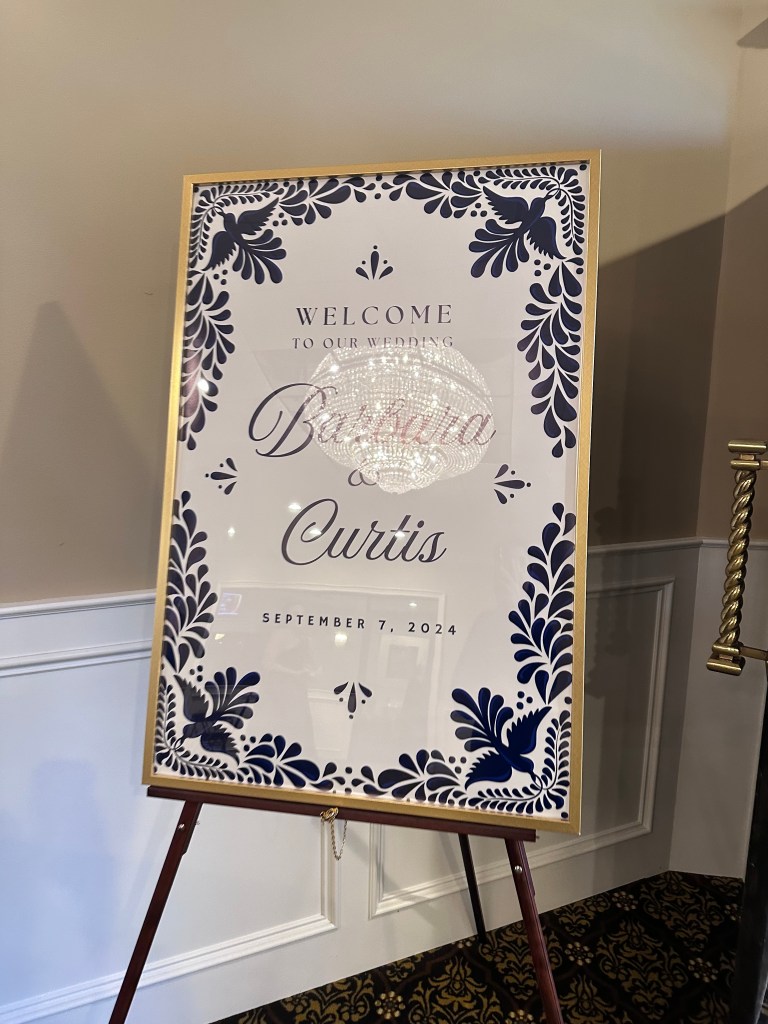
    I made a fool of myself on the dance floor at my awesome friend Barbara’s beautiful wedding in Detroit. Hopefully, at least one photo of me embarrassing myself on the dance floor is coming.

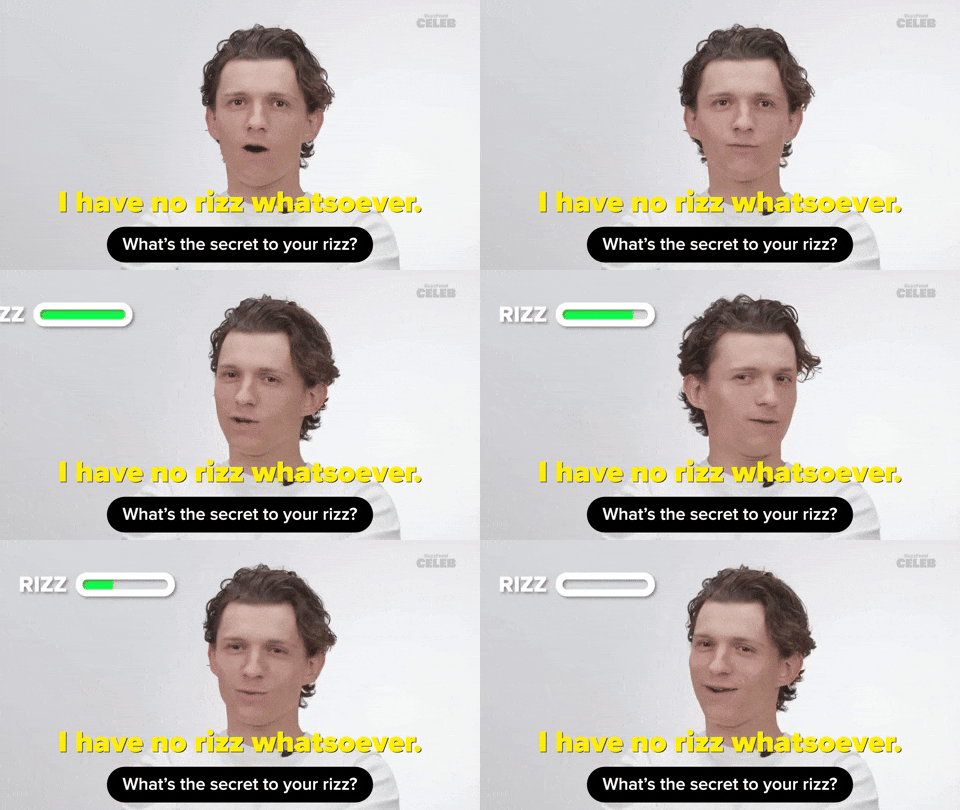
  • Rizz ain’t what it used to be

    September 1st, 2024

    Yep. It’s over. It was a great run while it lasted. 

    If you, like me, were impressed with yourself for knowing the common Gen Z parlance of “Rizz,” that time has come to an end. Trust me, if I use it in a blog post, its best days are behind it. 

    Rizz is officially out of style. The youths will have to find another word to rebel with. 

    Rizz comes from the word charizzma. It describes a person changing their personality to woo a mate. Turning on the charm, if you will. 

    In days not so long gone by, meeting your significant other in a bar or at a party was a commonly recounted anecdote from couples. 

    The idealized version goes something like: “I saw her from across the bar and I just knew I had to talk to her. So I walked up, laid down my best pickup line, got her laughing, and we just felt this instant connection.”

    The more realistic version goes something like: “I was pretty drunk. I accidentally bumped into her. I said something stupid. She laughed out of pity, and beer goggles did the heavy lifting.”

    Either way, the dating currency of the day was some combination of attraction, chemistry, and alcohol. 

    In the era of the internet, charisma has become cliched. 

    YouTube channels are dedicated to the art of wooing others with social nimbleness. Books have been written by pickup artists, showing that attraction and chemistry can be easily gamed. 

    Unfortunately, the person you have felt the most chemistry with may just be a charismatic person who generates chemistry with everyone. Or worse still, they could be faking it and manipulating you by using skills they don’t naturally have. 

    The internet has also enabled us to switch from an ‘attraction’ mindset to a ‘filter’ mindset by providing us with countless dating apps and services to find a perfectly curated match. 

    Anyone who has spent time on dating apps can tell you it’s not a big improvement. Someone checks all your boxes, but 3 minutes in, you can tell it ain’t it. 

    No matter how many boxes you have checked, you will be frustrated to find a general lack of attraction. Whatever list of features you convince yourself you need will be insufficient when actualized. 

    Filter mindset also ignores the fact that love is path-dependent. There might be a great fit you miss out on because you met them while in a bad mood. Or the wrong conversation leads you to prematurely dismiss them. Or the timing was off.

    Love is a dynamic dance. Not a math equation. Connection over perfection. 

    So what is the way through? 

    For the “attraction” mindset, sure, I guess you can try to be charismatic, but only if it comes from an honest place. 

    For the “filter” mindset, I have given up on hard filters. I have eliminated them from my thinking. 

    My experience with hard filters is that they are very dehumanizing and prevent you from having an honest relationship. I have soft filters that relate to my life principles. 

    But, the more I have thought about it, there is something lacking in both these mindsets. And there’s a third way that I hadn’t thought of as much. 

    The other reason people get together is that they are there. Present. Right in front of you. You can’t fall in love with someone if you never meet them. 

    Historically, this is the most common reason for falling in love. She grew up in your village. She was in your kindergarten class. The girl next door… 

    It may not feel like the grandest and most romantic reason in the modern world. To some, it may look like settling.

    But, It’s a reminder that love may be many things, but one of them is that it’s a choice. More important than any of our silly filters and fancies is choosing every day to love the people you spend time with. And see the good in them. 

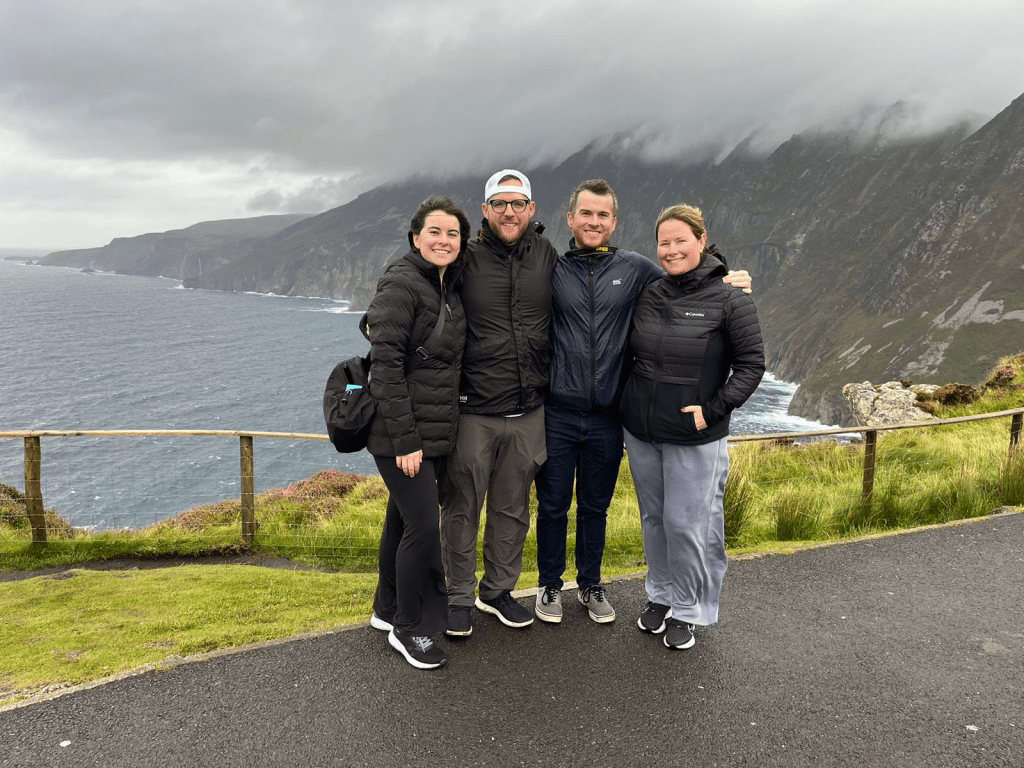
    Life Update: I had a nice trip to Ireland despite the Florida State score. Drank a few too many Guinness.

    I am headed to Atlanta next week.

  • Bourbon and Bluegrass

    August 11th, 2024

    Whiskey and Water. Blood and Bone. Rivers and Roads.

    Aside from my asinine attempt at alliteration, these words are among many tokens that ground most folk and bluegrass songs. They call back oft-forgotten memories deep in our subconscious that tie us to life: the harsh and liberating realities of nature, the essentials and accidents of life, and our roots.

    Most endearingly, however, these words evoke a specific place, a home. 

    Every place I go, most of the people I meet have a genuine love for their home. They are excited to greet a nomad and tell me about the lovely local spots. They want me to enjoy their home as much as they do.

    I envy this perspective, as I often struggle to feel at home. But even more so, I admire it.

    The easiest way to see the transformational power of love is to look at the transformation of places. When a group of people take pride in and love their home, they will beautify it—not just aesthetically but into a community that can come together and support each other.

    Or as Chesterton put it, “Men did not love Rome because she was great. She was great because they had loved her.”

    Jacksonville was built into a beach. Austin didn’t spring up from the ground one day, even if it feels that way. Raleigh’s sloping paths, which gently curve through the tree-covered hills, were formed with a purpose.

    It’s a cliche in Europe that the size of the oldest church or cathedral correlates perfectly with the city’s population. 

    You can’t help but feel the pride many hold for Kentucky. There are shady red brick neighborhoods. There’s a clash of Southern and Midwestern architecture. (and accents, for that matter)

    But, the people here love their Bourbon. Given my Irish roots, I appreciate taking pride in whiskey. Yeah Yeah… it messes up your sleep, can be abused, and gives us old folks debilitating hangovers. However, it also spreads cheer, social connection, and memories(even if they are a bit hazy).

    ‘Whiskey’ comes from the Irish word ‘Uisce Beatha,’ which means ‘Water of Life.’ Maybe because it makes you the life of the party. I don’t know.

    But, it is a perfect segue to bluegrass music, since ‘Water of Life’ would be a killer name for a bluegrass song.

    If anything makes my gypsy soul feel at home, it is folk and bluegrass music. Irish and English folk music, as well as the blues, are the strongest influences on it. 

    You can admire it for its playful story-telling style or the acoustic sounds that tickle your ears at a live venue. But for me, the real power of folk music is that it lives in the tension of things. 

    In every chord, melancholy interweaves with joy. You remember the friends who are no longer with you and yet be present to the ones sitting right in front of you. There is a sadness for the time that has passed and a hope for what is to come.

    Thematically, the token words repeated over and over in folk music will hammer messages of romance, life, and death. However, its most profound message may be about the transformational nature of our love for home. When we sincerely love a place, beauty, community, and flourishing will soon follow.

    Here are a few folk and bluegrass songs that bring the post home:

    https://open.spotify.com/track/0gDh8wdhIg5OM86SXUeXt7?si=896a63ac9cbb4da7

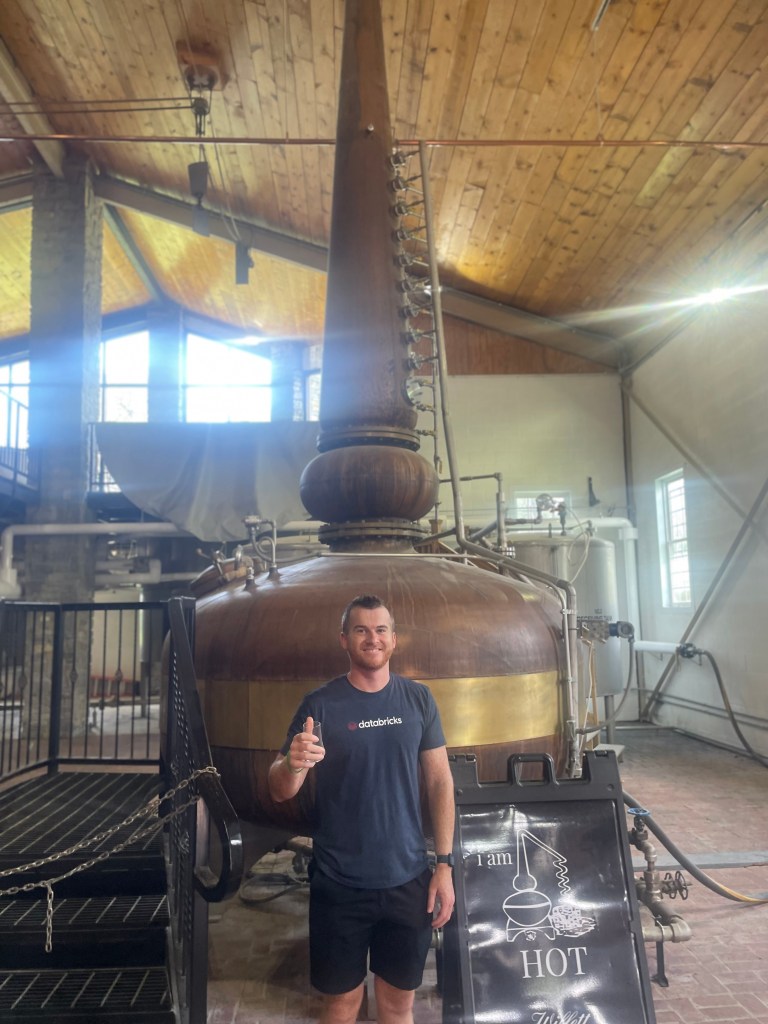
    Here are some pictures of me at the Willet Distillery(Yeah, I ain’t great at pictures…):

  • The Mirror Test

    July 28th, 2024

    A couple of years ago, I saw a woman post her credit score on her dating profile. While her credit card number, PIN, and SS number would have been more useful, I laughed. 

    It turned out this became a viral internet trend. It was more endearing than most dating content, but it still exemplifies many of the problems with online dating. Issues like: what gets measured gets managed, a transactional mindset towards relationships, and, the focus of this post, failing the mirror test. 

    Frequently, when people talk about relationships with me, they either say, “Never lower your standards. You deserve the world…” or something like that. Or they say, “Stop looking for someone who is perfect. Relationships are a work in progress.” 

    Like many single people, I hear the same advice over and over, and usually, the two pieces of advice contradict one another. I don’t mind it. 

    The first one miffs me. Lots of people have unrealistic, shallow, or downright silly standards, which have exploded in the age of the internet and dating app filtering. 

    Looking for someone with a certain height, weight, job, or eye color has never been easier. Those shallow filters have always been challenging to search for and harder to find. But I will post about the filtering mindset later. 

    The problem is that our interactions with social media, internet content, and dating apps distort our view of ourselves. 

    When you post an Instagram story (I still can’t figure out how those work…) that doesn’t get likes or views, your self-confidence dips. When you get a match with someone out of your league, you get cocky. When that same person ghosts you on the first date, you feel like a fool, and the negative voice in your head says, “I told you so.”

    Then, you decide to post AI-modified pictures to fix your crooked smile and sunburn and make the background sparkle. You get more matches with good-looking people who never call you back after the first date, justifying the inner voice even more. 

    While this self-talk existed in the past, it is now justified on a macro level. The entire friend group, city, or internet has judged you to be inferior. You’re now not only failing in a relationship but failing by the world’s standards. 

    Seeking external validation has always been a tricky problem. 

    If you are searching for the hottest, richest, and “Rizziest” person, you will be a slave to other people’s opinions. You have chosen to value what everyone wants, so the competition is fierce. 

    If you are looking for someone who is kind, consistent, and compatible with your values, you might get a good deal. 

    Butttt, this is a distraction from “the Mirror Test.” Whether it’s your shallow standards or your moral standards, you should still be able to honestly look in the mirror and ask what you bring to a relationship. The best standard for what you’ll get out of a relationship is what you bring to the relationship. 

    You want someone funny, you better be funny. You want someone hot, it’s easier if you are too. If you want someone who cares for others, it’s time to sign up for some charity work.

    Amusingly, using the credit score on dating profiles example, you saw people complain on social media that people with 600 credit scores expected to date 800+ers. 

    Most relationships have differences, and people bring different things to the table. However, healthy relationships are rarely strongly imbalanced. It’s better to go in with a realistic and positive vision of yourself. 

    The goal of a relationship is not to get a “good deal.” It’s to be a good deal. 

    Finally, if you want someone who lives with purpose, it’s time to pursue your own purpose. 

    Life Update: My brother Jay finished an Olympic triathlon! I was happily eating a hot dog and drinking a beer.

  • What is digital nomad dating like?

    July 6th, 2024

    I have yet to hear of another ‘digital nomad dater.’ If you have, keep it to yourself. I rather cherish the idea of being the first to have publicly done so. I am sure many people have moved to cities to meet potential partners. Others surely have digitally nomadded and found romance. 

    However, I wonder if anyone has yet been foolish enough to publically announce their intention beforehand. 

    A little over a year into my journey, I reflect on the experience and thought I’d share.

    We’ll start with the journey’s unique characteristic, intentionality. Being intentional consistently puts more pressure on me. 

    Most conversations with family and long-time friends center on my dating life. It can be uncomfortable because, despite this blog, I am usually a private person. Upon meeting new people, it often comes up quicker than I’d like. Upon going on a date, it complicates some of the conversation.

    I also put pressure on myself. In a strange new city, I feel obligated to socialize constantly to meet as many new people as possible. It would help if I were strongly extroverted, but I am only moderately so. 

    But, there are many benefits to intentionality. I skip the small talk. I make quick friends. Lots of people find it exciting and want to share their thoughts. I get to show people a sincere part of myself quickly. Some people think I am crazy, but I accept those are not the people for me anyway. 

    Regarding dating, I have gone on roughly 25 first dates. It’s the correct number to make progress but not be emotionally exhausted. Twenty of those have been through online dating. Five have been people I met in person or set up. Four of those went on to second dates, but none after that.

    Most of the girls are cool people, but for one reason or another, it’s fairly obvious it’s not a good fit even after one date. I happily became friends with several girls afterward. A couple of the dates have been trainwrecks.

    I got excited about seven girls. All of them I met in person, which is encouraging for someone who doesn’t like dating apps. However, six of the seven were in relationships, and the other lived far away and was only visiting, which is discouraging for someone who doesn’t like dating apps.

    I get discouraged occasionally, but overall, it hasn’t been far off what I expected. I figured finding the right person would take a year or two. I have a unique energy and am looking for something uncommon. Digital nomad daters are quirky bunch in my experience.

    Now for the practical parts of the journey. Adult life is still routine. I work, cook, and hit the gym each day. I love my beauty sleep, so I get to bed around 10:30 on weekdays and 11:30 on weekends.

    While I am always down for spontaneous social events and adventures, having weekly events like sports teams, book clubs, or improv is nice. Weekly pick-up events are the best because you can go each week but feel no pressure if you have to miss.

    Occasionally, I go to pickleball/volleyball courts, bars, and dance halls alone. This can induce social anxiety. However, given the absurdity of my life choices, I can reframe it as a social experiment, so I don’t mind much. I have also met loads of interesting people this way and gotten myself into amusing situations.

    Long-term Airbnb rentals are fantastic, especially when the hosts are cool (shout out to Sid and Marie). They are super flexible and only 10%- 15% higher than renting. You get a room, workspace, and access to the kitchen.

    Lastly, the mindset is quite different than normal life. 

    It’s the opposite of the Camino, where everyone comes for an adventure. I am on an adventure amidst a mass of everyday life. Others aren’t going to bring the same openness and energy. In many ways, it feels like the movie Yes Man.

    Planning is undoubtedly a challenge. The intentionality of the journey forces you back to the moment. The journey doesn’t make much sense if you plan too far ahead. You just have to be open to all the opportunities that present themselves from moment to moment.

    Early on, I put too much pressure on myself, essentially making social life a second job. But being more forgiving of myself puts me in a better frame of mind.

    Overall, I love it. Adventures allow me to be fully myself. My greatest aspiration in life is to participate in meaning. There is nothing like the feeling that you are in the right place, at the right time, and doing the right thing.

    From making breakfast in the morning to writing a blog post to deciding which city to move to, my life choices align with my values. What could be better than that?

    I’d recommend it to anyone who feels the call to do it and make it their own. 

    Life Update: AI Conferences and the family vacation are over. I am moving to Louisville, where my brother lives, for at least a few months. After that, I am considering a long stint in Atlanta or Tampa.

  • Social skills never go out of style

    June 23rd, 2024

    If you are one of the rare few left who don’t want to live in a virtual world, I am preaching to the choir. Effectively communicating what you want/need/believe is true is still crucial to accomplishing anything in work or relationships.

    I am writing this post at a conference on artificial intelligence (Yes! It is basically Revenge of the Nerds). 

    While I am bullish on AI helping us solve crucial technological problems, improve human material well-being, and open up daring new possibilities, I dread the continued degradation of human social life the internet has brought about.

      The internet of all things, sitting in our smartphones, in our pockets, has enabled us to cluster into echo chambers where we get cheap validations on our mental ruminations from strangers the world across. It tempts us with a diverse collage of dopamine hits every minute of the day. From cat videos to political drama to porn to dating apps, we can hardly breathe for being entertained. 

    We can hardly feel uncomfortable for a moment without that familiar reach to the pocket for cellular comfort.

    The movie Her eerily captured many of these dynamics. Joaquin Phoenix’s character soothes every uncomfortable emotion of loneliness with an ever-present AI girlfriend, whose voice was played by Scarlett Johansson. 

    In an unsettling twist, OpenAI failed to recruit Johansson to be the voice for their AI chatbot, hoping to recreate a dystopian film. Subsequently, they stole her voice but dropped it after being threatened with legal action.

    This saga illustrates how AI continues the trend of technology distracting us from our negative emotions.

    Worse still is our desire to control our relationships. 

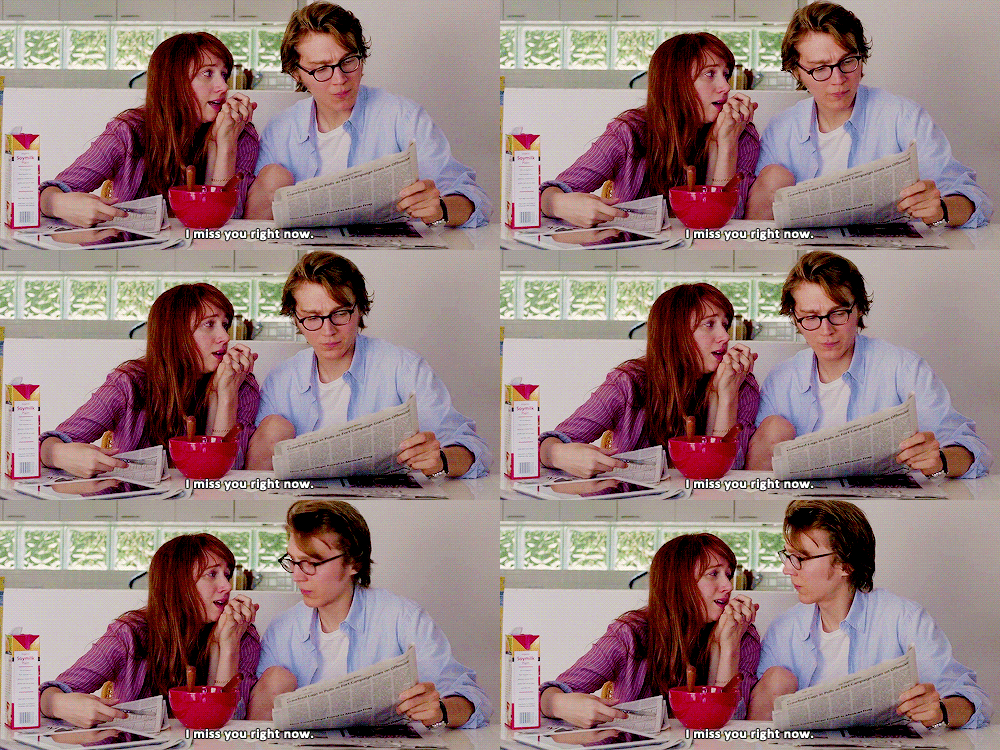
    One of my favorite films is Ruby Sparks. Paul Dano plays an author who overcomes writer’s block when a girl comes to him in a dream, and he writes about her. She upends his life by becoming real and, subsequently, his girlfriend. Thus, he is in a controlling situation where he can make her do whatever he wants by writing it into being. Like excess clinginess…

    I won’t spoil the movie, but it reflects on ego and control. 

    AI will tempt us to create ‘perfect’ relationships where we specify exactly what we want. Always maintaining control.

    These relationships will never be real. Human relationships require struggle through negative interactions. To be surprised by people. To find beauty in the brokenness of people.

    Social situations are anxiety-producing because, heck, most things in life are anxiety-producing. When we meet another person, we are confronting yearning and chaotic souls. We don’t know what opinions, questions, and energy we will face. That’s just how it is.

    A lot of research shows we expect social interactions to go worse than they actually do. The guy sitting next to you on the plane is probably more interesting than the movie you want to watch.

    If we avoid, distract ourselves, or control others, we will miss out on the bliss of human connection. 

    All of my fondest memories in life were in the presence of others: Sitting around listening to a guitar, playing with ideas in a philosophical convo, or exploring vulnerabilities, hopes, and dreams with a close friend.

    I know these experiences are becoming rarer, but we will hold on to them. They are in our nature.

    Life Update:

    I have left Austin, went to the FSU Super Regional in Tallahassee, and of course went to San Francisco.

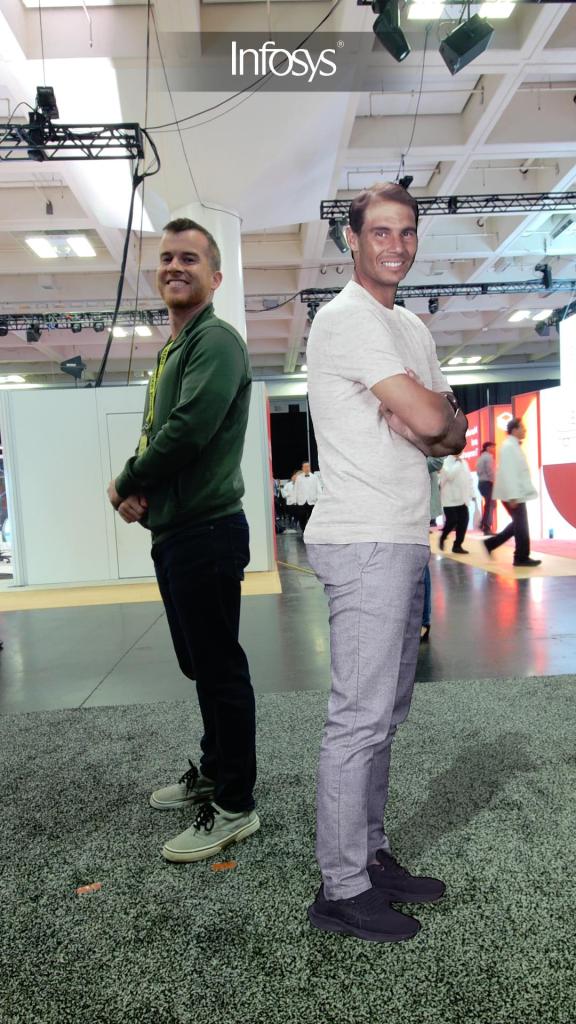
    Taking a nice vacation from the Journey. Here’s me with AI Rafa Nadal:

  • The “Spark”

    June 2nd, 2024

    The Spark has a branding problem. 

    When talking to people in 5+ year relationships, they almost uniformly dismiss it out of hand as romantic nonsense. To single people, they say, “Why don’t you date this person X? Or person Y?” Most often, the answer single people give is they just don’t feel any attraction or chemistry towards person X or Y.

    Dating podcasts/books/coaches are similarly frustrated by the spark. Cynically, this is because the spark cannot be easily manufactured, controlled, or integrated into self-development strategies. However, their frustration comes from a real place. 

    Experience says that the spark is just as likely to turn into an explosion that burns your whole life to the ground as it is to develop into a comforting fire that warms you on a cold night.

    The problem is that our intuition is not always tuned for success. People with avoidant/anxious attachment styles are susceptible to the spark leading them to harmful relationship patterns. 

    Sometimes, we only want what we can’t have. In this case, someone right for us comes across as boring.

    Searching for the spark can doom us to a scarcity mindset. 

    Since it is so rare to feel the spark, we do anything possible not to mess it up when we do feel it. This leads to desperation. Suddenly, we allow our boundaries to be trampled upon, become people-pleasers, and move all of our plans to see this person. This lowers our value to the other person. When the other person starts pulling away, we double down and panic to try and keep them.

    Dating podcasts call these common patterns ‘trauma bonding.’ We’d like to bond with a partner based on kindness, consistency, and mutual giving, but instead, we bond through jealousy, fear, and insecurities.

    Add to that, some people are naturally charismatic and ‘sparky.’ They just have a way of getting people to fall for them. Usually, these people leave a trail of broken hearts through fake bonding. 

    Worse still, psychologists believe we can become addicted to this sparkiness, where we relentlessly chase and worship the feeling instead of the object of the feeling.

    In other words, the reputation is well-earned. However, the baby cannot be thrown out.

    Despite its bad reputation, most singles feel that lack of chemistry is holding them back. Love is not a primarily rational thing. It’s difficult to think yourself into spending your life with someone. That’s why most successful relationships start with ‘It just felt right.’ Trusting your intuition is much easier than reasoning your way into it.

    I entirely admit this is a different process, depending on the person. Some expect love at first sight and instant chemistry. Others look for the slow burn and will grow more sure with time. For some, love must be passionate, spontaneous, and adventurous. Others just want to feel safe and comfortable. Some people aren’t very intuitive and find spark talk foreign.

    However, for most people, that intuitive ‘just feels right’ feeling is a healthy and necessary part of building a long-term romantic relationship. Being in a relationship means that you are bonded to that person. Otherwise, when things get complicated, you will leave.

     It just doesn’t do to be indifferent to your life partner. That’s settling.

    I don’t know if there is an ultimate solution to this problem. For me, I focus on living by my principles and being dead honest with myself about who I am. Life is best when my intuition and analytical brain are in sync. 

    Often, we can feel when our intuition is out of tune. It doesn’t align with our best selves. That’s when you have to do some digging.

    If I intuitively feel something is not quite right with someone, it takes me some time to understand why. But, usually, my head and heart come to an agreement.

    Don’t chase feelings. Don’t deify them. Don’t ignore them. Try to get to a place where you can trust them.

    Update: My team won the Pickleball championship. It’s about damn time. I have done so many of these freaking social leagues to finally win one. Very fun season!

    This summer, I will be taking a break from the journey as I have a lot of travel planned. I am going to San Francisco for an AI conference and have a couple of family vacations planned.

  • Austin and the Cult of Pickleball

    May 18th, 2024

    There is a cliche in Austin that everyone thinks the city became overpopulated right after they moved in. This is crazy because, in my opinion, it only really got out of control after I moved here in January.

    On my first day in Austin, I took a long walk through the city. One of the first things to catch my eye was stickers posted on signage that read ‘F*** New Austin.’ 

    It was unsurprising. A brief stroll through East Austin shows a fast-changing neighborhood.

    Every other house is what I call a ‘Soulless Tech House.’ Two-story sleek houses with flat wooden walls painted with a single deep color, huge windows, a tall fence, a security system, outdoor LED lights, and a small driveway with two Teslas parked side by side. 

    Or you have the old Texas houses built of cement brick painted multiple shallow colors, a short see-through fence, Cacti and Yuccas adorning the landscape, either a pair of longhorns attached to the wall or a mural of Our Lady of Guadalupe painted somewhere on the property, and finished off with a pickup in the driveway.

    Nor could I ignore the 8-10 cranes over the downtown skyline. Given the 400% population growth over the past 40 years, I figure the cranes are a constant presence.

    East Austin is still littered with grungy Mexican restaurants, eclectic street art, and food trucks as far as the eye can see. Bars are full. Zilker Park is packed. Dog walkers have invaded. Many young professionals bring an energy you don’t see in other cities.

    But with this energy it has become land of pickleball. Basketball courts and Tennis courts are painted over in the name of pickleball. 

    Pickleball is a digital nomad’s dream. After work, head down to the courts and play some pickup pickleball. You quickly get inducted into pickleball groups that play and go out for drinks. Pickleball captures the transient young professional ethos unlike anything. Maybe that’s why it has taken over Austin.

    Austin Natives I talk to have varied perspectives on the newcomers. Many love the energy, the jobs, and the increase in the value of their houses. Others resent the displacement of the culture, neighborhoods, and people.

    The USA seems to abide by the mottos: ‘New is always better’ and ‘live in the future, die in the past.’ We may be nostalgic for a world gone by, but the communities we love usually go the way of the dodo to make way for the new thing of the day.

    Unlike most countries, Power is always on the side of a certain kind of change in the US of A. It’s up to us as individuals to preserve what we love.

    What makes me feel most conflicted about my adventure is its transience. I want to respect what is local and be as present to the community as possible, no matter how short my stay. 

    FYI: Pickleball championship this weekend. We are in 1st place and I always get 2nd or 3rd in social leagues. Pressure is on…

  • The Clicheifaction of Everything: Searching for Winnie the Pooh

    May 5th, 2024

    You look across the living room and see your dog has fallen asleep in a rather absurd position next to its toys. Legs splayed out—hardly a care in the world. 

    You type into YouTube: ‘cute puppy.’ The next 15 minutes watching adorable puppies do silly things are a roller coaster of emotions. 

    Then, you come across a video of a puppy drenched in oil. The video shows a do-gooder YouTuber rescuing a starved puppy from an oil spill and slowly nursing it back to life over an accelerated 90-day timeline. Your eyes get a little misty.

    Your roommate asks, ‘What’s wrong?’ You say, “Nothing, just allergies.”

    Over the next few days, the algorithm takes over, and hungry oily puppy rescue videos spam your feed everywhere you look. You subscribe to the Youtuber to help her cause.

    But, the following day, you awake to a video recommendation of your YouTuber vociferously defending herself against slanderous allegations, emphasizing her good intentions amidst the backlash. A quick Google search reveals that she is accused of abusing puppies for the sake of the videos.

    The outrage machine has blown up. She’s trending on Twitter and is going on the podcast circuit to clear her name. You quietly unsubscribe… But, keep following the story…

    After her podcast appearances, she announces a $1 million sponsorship with Petsmart, and you have given up all hope of goodness in the world.

    You meet up with a friend who went hiking in Patagonia off-grid for three weeks. You regale them with the entire viral internet puppy drama and are surprised at their frank disinterest. You are jealous and wish you didn’t care either.

    You return home feeling cynical and jaded about the world and yourself for caring. Open the door; your dog excitedly greets you. You reach down to pet it, but in your head, you think, ‘This whole thing is your fault…’

    Yes, I jest. I may have dramatized it a bit. But, I call this the clicheification of everything.

    News stories and entertainment follow the familiar rise and fall as before, but at a much faster clip.

    Our ancestors lived in small tribes and villages. Once a month, they would gather for a feast, and the best singer would get in front of everyone and serenade the gathering with music that felt like it came straight from heaven. It would unite them in their mutual admiration of beauty. 

    The best storyteller would enchant the tribe with tales of bravery and woe. Reminding them of the challenges they face and the great things they can accomplish together.

    The world has changed. Our storytellers are film directors with a lifetime of training and a hundred million dollars at their disposal. Our singers are prodigies who work their whole lives perfecting the craft.

    However, the most significant change is that art is now an individualized consumption act instead of a shared communal experience.

    We slam the repeat button on the song we love and listen to it 50 times a week with our air pods shutting out the world. We choose one among thousands of selections on Netflix to watch within our homes. And it will be the thousandth movie we have watched. Let alone YouTube or TikTok videos, which we can scroll through dozens in an hour.

    Two wheels have touched down on the dopamine highway, and the speed limit is 1000 miles per hour. What does this do to us? Why does it matter?

    It fractures our most precious resource: our attention. We find building community in the real world difficult because we prefer screens. Most importantly, it disrupts the stories we tell ourselves about ourselves.

    Our self-narratives are shallower and more individual, leading to prolonged periods of cynicism and purposelessness. Whether it’s a cute puppy or a majestic mountain view, our moments of beautiful simplicity give way to hard intellectual takes. Or we repeat the beautiful song so many times that it loses meaning.

    A few years ago, I despaired at the lack of good newly released films. A decade earlier, I had given up on superhero and alien space movies. Rom-Coms had cliched themselves to oblivion. Movies boldly putting forward big ideas were not getting made. Instead, we got timid films that were too cynical to give us anything but anger. 

    Pop music, outside of Taylor Swift, mostly failed. I couldn’t find any good new music in my favorite genre of Indie Folk. It seemed like we ran out of songs to sing. Our new fragmented landscape reduced the depth of art we could create. 

    I resigned to rewatching Lord of the Rings, Inception, and V for Vendetta. If I wanted something simple and beautiful, I’d have to rewatch Winnie the Pooh.

    I was wrong. We can only stew in cliches for so long. There are new stories to be told. And they help us navigate the complex world we have entered. 

    The Oscar nominees proved that this year. American Fiction was sharp, clever, and hilarious. Killers of the Flower Moon was heartbreaking. Past Lives was as purely romantic as a movie can be. Marcel the Shell with Shoes on was as simple and genuine as my old friend Winnie.

    Some old dead guy, William F. Shakespeare, taught us principles of storytelling that never change: Stories should be told playfully or tragically or else not told at all. We only get stuck in our own cliches when we stop dreaming about tomorrow.

    Life Update: Still enjoying Austin. Considering my next move.

←Previous Page
1 2 3 4 5
Next Page→

Blog at WordPress.com.

Loading Comments...
  • Subscribe Subscribed
    The Purpose Driven Date
    Join 27 other subscribers

    Have a WordPress.com account? Log in now.

  • The Purpose Driven Date
    View site in Reader
    Manage subscriptionsSign upLog in
    Report this content
    Collapse this bar