• About
    • Contact

The Purpose Driven Date

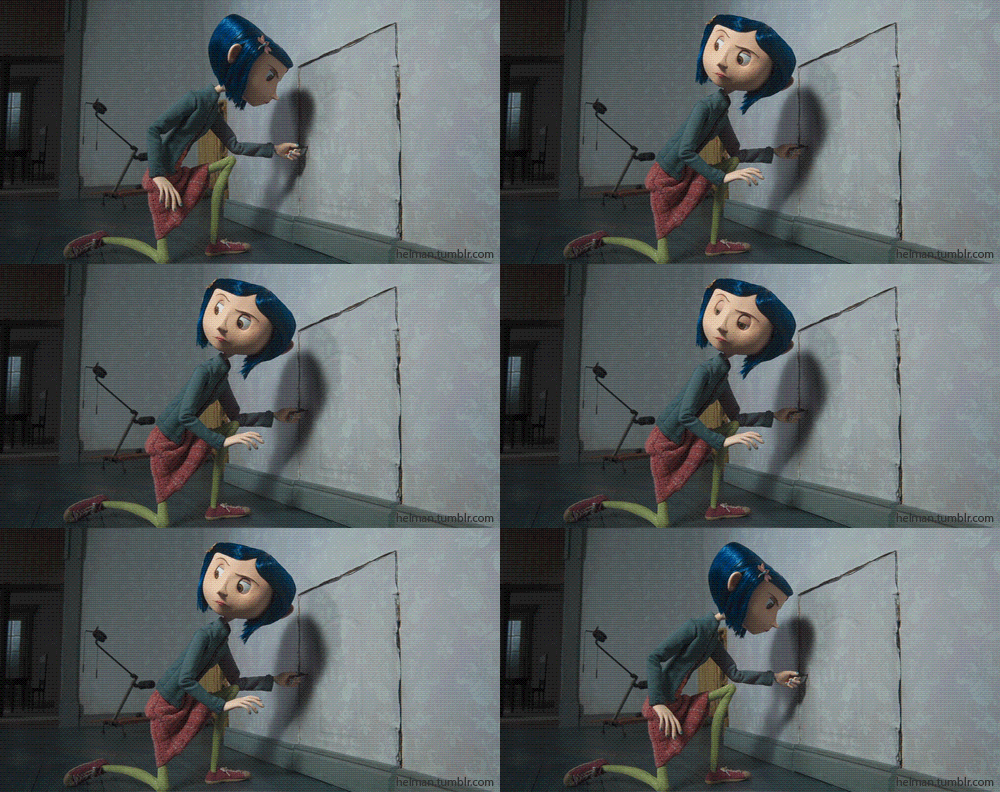
  • Wild Robot isn’t a Kid’s Movie

    March 23rd, 2025

    Contrary to popular belief, there were several outstanding films at the Oscars this year. However, they weren’t Best Picture nominees.

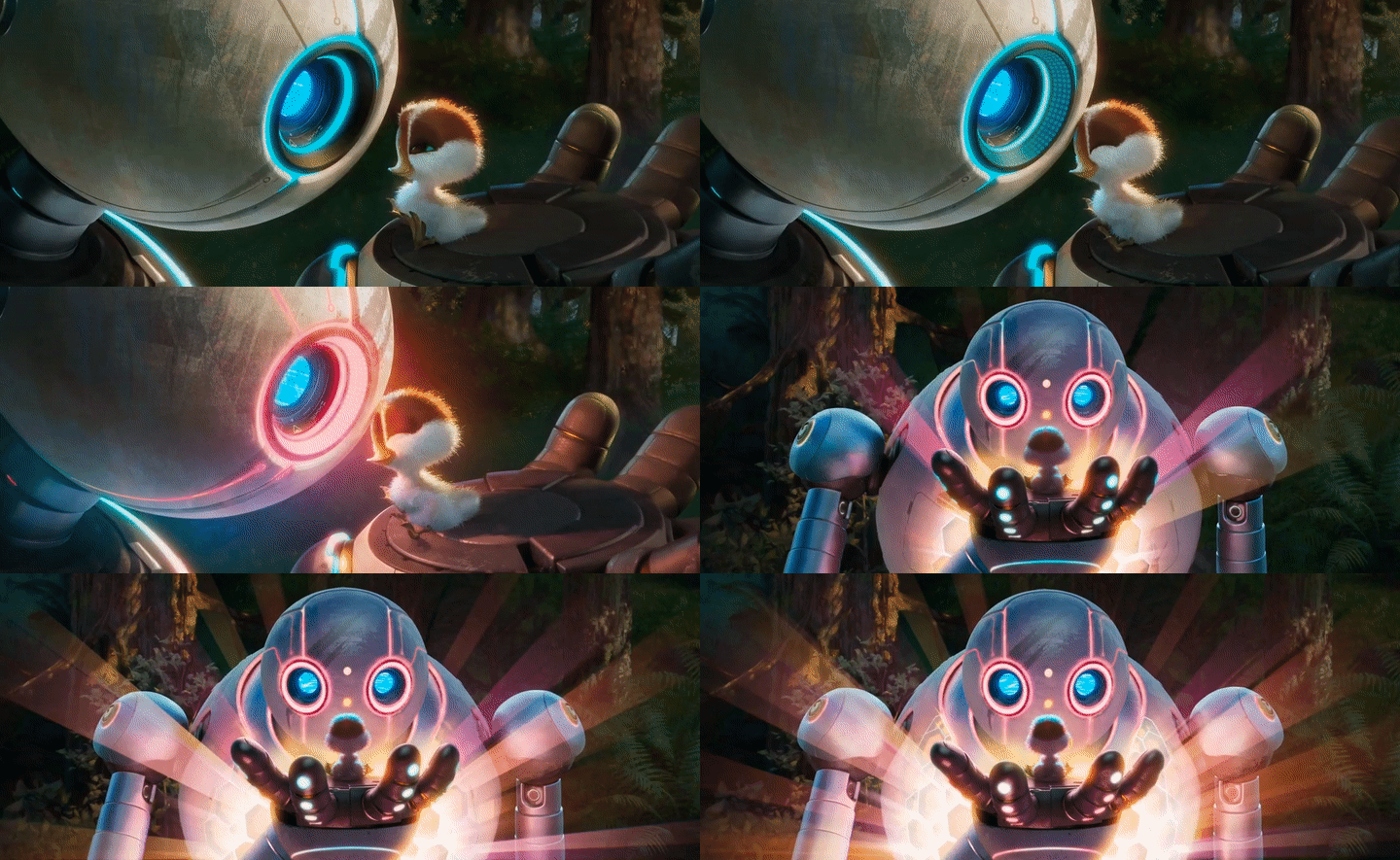
    Wild Robot was nominated for Best Animated Feature but was one of the year’s best overall movies. It perfectly captured the intersection of technology, community, and relationships that define our current cultural moment.

    Roz is a highly intelligent robot that accidentally falls off her ship onto an island inhabited by wildlife. She is programmed to identify a task, learn its context, complete it perfectly, and then return to her corporate overlords. 

    But, she is a fish out of water on the island. All of the animals hate/fear her. She has to learn their language. And she has no pre-defined task, making her purposeless. While learning about the island, she accidentally kills a mother goose, and only one egg survives. The ugly gosling(goose) is small and has malformed wings.

    Roz, with no straightforward task assigned to her, accepts raising the gosling, Brightbill. She must teach Brightbill to fly before winter, or the flock will leave him behind. At first, she mathematically models proper flying technique, but that doesn’t quite work. Only when she enlists the community’s help does Brightbill learn to fly.

    Even after Brightbill learns the skills he needs, the other geese still do not accept him as they migrate for the winter months. Roz must let go and let Brightbill find his own way.

    But I don’t want to give away too much of the film. Because you should watch it. 

    It’s a fantastic film because it showcases timeless truths about human nature and captures our current moment well. 

    Countless podcasts teach us how to optimize our sleep, fitness, and productivity, and we then pass that optimization on to our kids. We are anxious about a dangerous world and overprotect our children, encouraging their dependence on us. Lastly, more people are deciding not to have children, seeing it as a massive cost without much benefit.

     These problems intersect because we live in an increasingly transactional world. An unfortunate fact. Whether it is professional, friendship, or romance, relationships usually only sustain themselves when there is a balanced give and take.

    Paradoxically, Parenting is a relationship in which the transactions seem super one-sided. The parent gives time, energy, housing, safety, sleep, food, money, emotional support, educational support, vacations, sports camps, car seats, life lessons, listening to Baby Shark 7,349 times, and love. And the child gives… well the child doesn’t actually give anything.

    What do parents get out of parenting, then? There is only one thing: the most meaningful experience of your life. 

    There is nothing quite so meaningful as giving everything to a useless human full of potential, watching them grow and learn, all the while you fade into the background.

    That’s what inspired me so much about Wild Robot. Roz constantly fades as Brightbill becomes a fully self-actualized goose. Along the way, Roz learns just as many lessons as Brightbill.

    Wild Robot is not a kid’s movie. It’s a parenting movie.

    I had a great college experience at Villanova. But I heard, ‘You have to do what’s best for you.’ one too many times. The meaning in life comes from not doing what’s best for you but what is best for others.

    Don’t get me wrong—it’s practical advice not to be taken advantage of in this transactional world. If you always put others first, you will be taken for a ride.

    When I got to Haiti, the president of the Haitian Project told me, ‘I don’t care about you. You have been given every opportunity in life. It’s time for you to stop taking and give. These kids have had no opportunities. Your volunteer year is not about you. It’s about them. If you have a tough year and get out of here in one piece, it’s a success.’

    I loved that. Finally, someone acknowledged that the key to happiness is not thinking about your happiness but others’. Teaching was the most meaningful experience I have had. 

    There is no experience in the world like watching kids learn, grow, separate from you, and bring their unique gift to the world.

    Some other Oscar recommendations:

    • Anora was a worthy Best Picture winner. Amazing film on the painful lessons of love.
    • A Real Pain was a very touching tribute to Jewish grandmothers.
    • Lots of great international films, too. I’m Still Here, All We Imagine as Light, and the Count of Monte Cristo were amazing.

    Life Update: I have moved to Nashville and am loving it so far. I had to say goodbye to friends in Atlanta. Below is my beach volleyball team.

  • The Babel of the Sexes

    February 23rd, 2025

    When you have a good metaphor, you must beat it to death. I built this blog on the thesis that the internet has turned our world into the Tower of Babel, and I have no shame in beating this metaphor to death. 

    And the babelling of the sexes, despite being a delightfully fun phrase to say aloud, is much more destructive and less entertaining than Billie Jean King and Bobby Riggs ‘Battle of the Sexes’ tennis match.

    When people in long-term relationships consider the current dating chaos, they say, “I am so glad I am not single anymore and don’t have to deal with all that craziness.”

    I wish I could tell them it’s not that bad, but based on my conversations with lots of single people, there is near universal agreement that it is. 

    How did it get so bad? Is it the dating apps, social media, or the fact that all the dating rules are gone? Well, yes, those contribute, but the most worrying trend may be that the internet is divided by gender.

    As a recent NY Times podcast put it (and my own experience), Men are from YouTube and Women are from TikTok. There is something about the algorithms that appeal to different genders. The platforms push content that divides men and women not just on politics but also on views of relationships, not just in the US but worldwide.

    Male content is frequently referred to as the ‘manosphere.’ I don’t believe there is a quippy name for female content, so I’ll call it the ‘girlternet’ for this post.

    Many want to stereotype the manosphere as misogynistic, but that’s a lazy generalization. Tons of creators have very different philosophies. Andrew Tate may get headlines, but Chris Williamson, Dr. K, and Connor Beaton have lots of great content for navigating your emotions and relationships maturely.

    However, like the news, the most sensational stories bubble to the top. The man who cheats on his wife, who has cancer. Or the women who encourage others to use dating apps to get free meals off guys.

    If you search the internet for a story that confirms your bias, you will always find one. And so it goes with dating.

    Singles frustrated by a breakup, lack of success, or a pattern of disappointment can go to the Internet and have all of their resentments validated. These resentments can harden into attitudes about how the other gender behaves.

    Now, the next date you go on you have brought emotional baggage by placing expectations on someone you have never met. And, likely, the way you act will create a vicious cycle that only confirms your negative attitude.

    And, thus, we have Babel.

    There is a profound chasm in how men and women talk and think about the world, and they can no longer communicate.

    How can this be solved? I wish we could just listen to the better angels of the Internet, who can teach us how to communicate more effectively. But I am not sure that’s enough.

    Good dating advice would be, ‘Don’t sweat rejection. It’s all part of the process. Move on, and you’ll find a better fit.’

    But, in the age of dating apps, you can get rejected more times in one day than a typical person in the past would have gotten rejected in their whole life. Dating isn’t on a personal scale. Not even on an industrial scale. It’s on a global scale.

    So many options. So many first dates. So many failures.

    Any good dating advice could eventually ring hollow in such an environment.

    The only answer is boundaries. I am building mandatory phoneless/internetless time into each day to let my mind wander, deleting dating apps for extended periods, and considering getting a timed phone lock box.

    Many of us have experimented with these types of things. They work well until laziness takes over, and we stop using them. However, we will become more sophisticated about setting these boundaries. Even tech may help us limit our tech time.

    We may all sit and watch as the Tower of Babel is building straight into the skies, but we can also get up and leave. Touch grass. Chat up a stranger. Make a horrible dad joke and laugh at yourself.

    Life Update: My nephew, Trey, won a playoff game to great fanfare before the end of his high school basketball career. I was lucky to get home to see it.

  • Staying Young(but not in a Sad Way)

    January 26th, 2025

    Several joys come with teaching: the dictatorial power to give out detentions like candy, pretending not to laugh at the class clown’s joke, and pranking students who have fallen asleep by painting their fingernails.

    Most of all, you will get the opportunity to listen to a high school senior describe their dreams, how they will change the world, and their oh-so-naive hubris in their future endeavors. And then you will see it. 

    It’s a glimmer in the eye. It contains hope, excitement, and a powerful love for life in a solitary look. It’s youth. 

    It’s fairly common to find this bright-eyed and bushy-tailed energy among the young, but it’s strikingly rare when you see it in an adult.

    Society values adults for being consistent and dependable. We show up and do what we must. However, our dreams are often watered down or abandoned. Even when we get what we want, we usually realize that our dreams weren’t all they were cracked up to be.

    Worse yet, we get stuck. We stay in a job we don’t like. Or we can’t escape the same patterns in relationships. Or we lose our love of learning/adventure/creativity. We trade in our dreams for stability. It’s not an illogical or unnecessary trade. When people depend on us, we are responsible, and there is nothing admirable about an irresponsible adult. 

    This is when the mid-life crisis hits. Buy a sports car, get plastic surgery, or hang out at a place you are way too old for. You hit rock bottom when you scroll through urban-dictionary for an hour after a conversation with your niece because you can’t understand a word she said.

    However, your new car, new nose, and new lingo don’t eradicate the actual nagging feeling you have inside.

    We make the most common mistake: mistaking external appearance for internal reality. We make our identity our external characteristics. For example, I tell people I am a data scientist, a tennis player, and a digital nomad. 

    Nobody gives a bluh about me being a data scientist. What people want to know is your story. In other words, age may be a biological reality, but youth doesn’t have to be.

    My mother has a sign she put up in the house that says, “Bloom where you are planted.” My initial reaction was an eye roll. It is because people put so many signs with platitudes in their houses, and I just assume it is a deepity. (A deepity is a phrase that sounds profound, but it is a trivial statement when you take it apart.)

    However, my mom’s phrase is the key to keeping that youthful energy about you. Yes, you have to be responsible and consistent when you are an adult. Most of your life decisions have already been made, your path has been chosen, and your roots have been put down.

    Wherever your roots are put down, there are still adventures. There are new challenges to face. New people to meet, help, and connect with.

    I wouldn’t have admitted it at the time, but when I chose to live in Haiti, part of me ran from the US. I thought US culture had died with the invention of the smartphone. I thought the US was where people were lonely and self-involved instead of community-oriented.

    Only after returning could I reframe the challenges technology has given us as opportunities. All cultures and people get stuck in their challenges, viewing them as unsolvable and stagnant. 

    Reframing your challenges is the only way to keep the story going, and young people can do this reframing quickly.

    Simply put, staying young is realizing your story isn’t over yet.

    Life Update: My improv group had an awesome show and I almost broke my foot in the process.

  • The Golden Rule of Dating

    January 12th, 2025

    When I introduce my digital nomad dating journey to people in relationships, the reaction is usually positive intrigue. They say, “What a great thing to do while you are young!” Even though I am not that young…

    Amongst singles, I still usually get a positive reaction. However, it’s fairly common to see that familiar cocking of the eyebrow accompanied by a look that says, “You are doing what? Red Flag. You are breaking the golden rule of dating.”

    I knew this from the jump. In my head, dating, while a significant part of the journey, was not the sole motivation. If it was the sole motivation, it would complicate any dating I actually did.

    Only when talking to others, when they zeroed in on the dating motivation, was I convinced to blog about it. Especially since I was yearning to start writing about anything I could.

    So what is the Golden Rule of Dating?

    Don’t go on a romantic journey to find love, and definitely don’t write a blog about it. 

    Well, yes. For me, at least. And I broke it. I did so because, unfortunately, I am prone to thinking rules are beneath me. But, it’s too specific. A broader rule would be:

    Don’t make dating your sole focus in life. It will happen naturally when you least expect it.

    This is better, but not quite right. In your late 20s and 30s, you must make an effort, or nothing will happen. Especially for guys. A deeper version would be:

    Don’t be desperate!

    Desperation attracts desperation. It pulls people out of the moment and leads to bonding with people you shouldn’t. But, most singles want a relationship. So, how do you want a relationship and not be desperate?

    Accept being single, even if it means it for life.

    Accepting the full range of possible outcomes is not only admirable but also advantageous for relationships. It reduces pressure and expectation. It draws us back into the present because the future is not guaranteed anyway. Important, but a more positive rule:

    Live a great life. Dating always works out best when it comes along for the ride.

    There is a new concept called ‘F You Money,’ where someone is rich enough not to need anyone else for money. In this case, you would never stay in a job you didn’t like. This gives you inherent negotiating power over anyone. Anyone who asks you to do something you don’t want, you just say ‘F You. I am out.’ Despite it’s crassness, it’s a useful concept.

    The same could be said in dating. Live an ‘F you Life.’ In this case, you only enter relationships that add to your life. That can help you both to enter a growth relationship instead of a codependent one.

    When you live an F You Life, you easily set boundaries, go at the right pace, and be present while connecting with a date. There are so many gifts in the present moment that can only be realized when we let go of our future expectations.

    So, no. I don’t talk about my journey as much as I used to in conversation. 

    When I talk about it, it pulls many people out of the moment and makes them start making all sorts of assumptions. As described in my Pimp vs Simp post. My goal in conversation is to bring people into the present.

    That’s why this blog isn’t actually about me and it’s not even about dating either. It’s about living a meaningful life, connecting with people, and searching for a place to call home in this strange world.

    Life Update: Saw my first snow in 8 years or so. Once was enough. Also, learned Dogs have no shame in marking their territory on a snowman.

  • Why has the Rum Gone?

    January 1st, 2025

    Alcohol sales plummet! 

    Alcohol producers are in chaos as consumers flee from alcohol toxicity!

    Job losses mount as the alcohol industry is in free fall!

    Now that I have your attention by hacking into the human brain’s negativity bias, penchant for hyperbole, and attraction to thumbnails, I want to draw your attention to a slight reduction in alcohol consumption in the USA, more pronounced among the youths.

    Many will split on whether this is a positive or negative development. 

    Those who enjoy the hazy ambiance of an Irish pub, the pulsating beats of club life, or even a glass of wine after a nice dinner likely wish more would share in the good times. The sober among us would point out the health benefits, reduction in alcohol-related accidents, and the simple joy associated with playing board games. (Though if they believe that, then they have never played board games with me)

    To me, it all comes down to the intentions of those reducing their intake. Suppose the reduction stems from a decline in alcoholism (which would decimate the alcohol industry, btw). Or it could come from Huberman bros trying to optimize their health. In that case, you’d have to say the benefits would be immense despite alcohol producers trying to convince us of its positive health effects.

    However, if it’s due to the continued uprising of the introverts demanding we all stay home, put on Netflix, and chill… Well, then, I am not so sure.

    College football stadium capacities are being reduced as they cater to boujier clientele. Parking, hotel rooms, and restaurant prices have skyrocketed, further incentivizing the at-home experience. Social events are generally becoming cost-prohibitive, and their at-home alternatives are affordable and improving in quality.

    Arthur Brooks, a happiness researcher I have referenced several times in this blog, made the critical point that pleasurable activities only contribute to your life satisfaction when they can be done with other people.

    Scrolling the internet in your bedroom, eating a whole Domino’s pizza by yourself, and getting drunk alone are not on the Mount Rushmore of wholistic life choices.

    If the younger generation substitutes alcohol for the attention-sucking solitude our culture is trying to lure people into, that would be a bummer. Alternatively, substituting alcohol for sports leagues, Settlers of Catan marathons, and quality time with friends could be quite the boon for social life. 

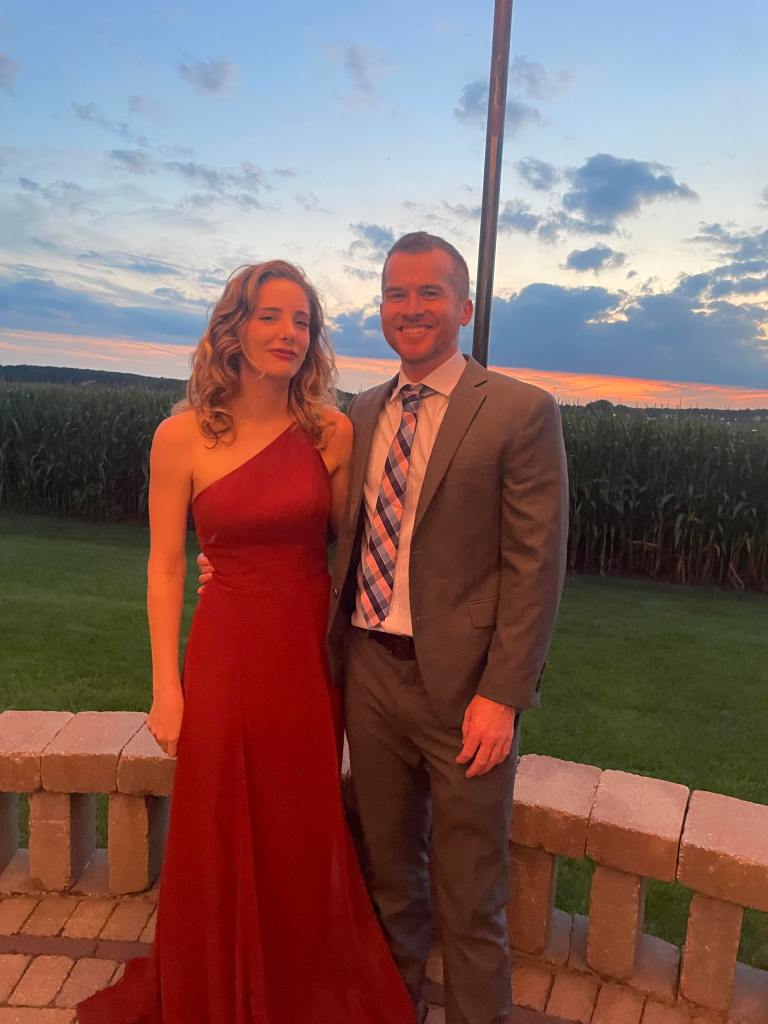
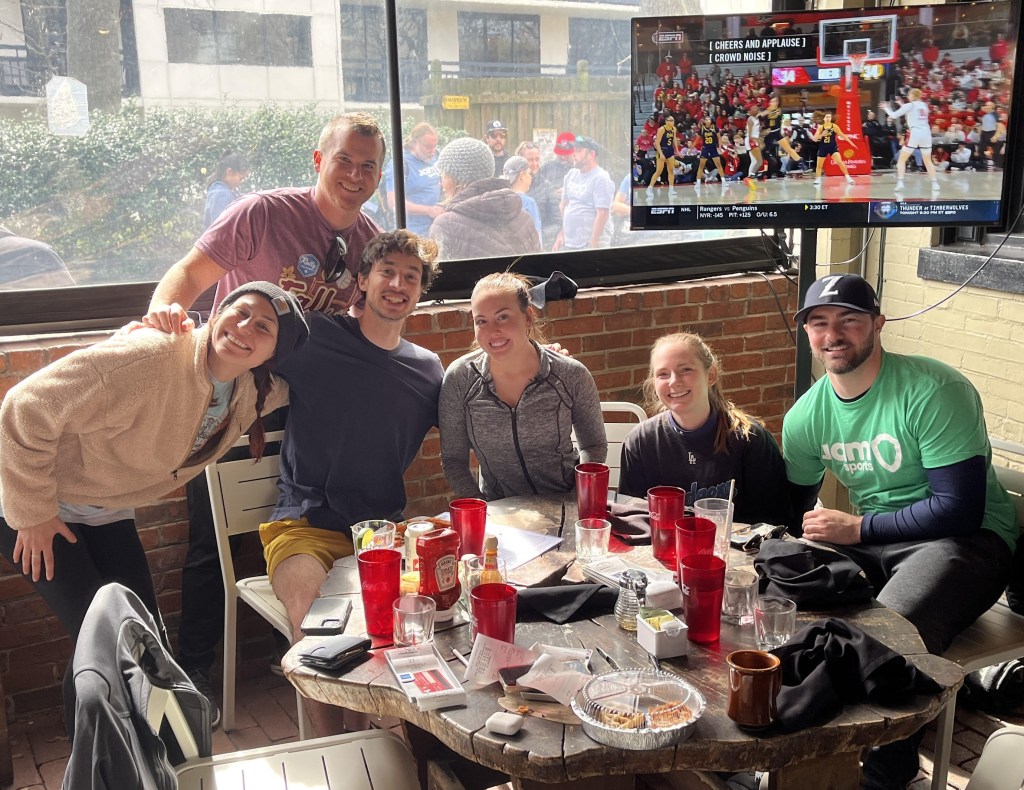
    Life Update: Here is a picture of me and my work team at our end of the year party:

    We tried to increase the alcohol statistics slightly.

    It was nice to be in Orlando. I had a fun time with my fellow data nerds.

    Happy New Years!

  • The Crotchety Acceleration Hypothesis

    December 15th, 2024

    “Children are now tyrants not servants of their household. They no longer rise when elders enter the room. They contradict their parents, chatter before company, gobble up their food and tyrannize their teachers.” – Socrates

    At the ripe old age of 27, I discovered the sheer pleasure of looking at those younger than me and thinking, “What is wrong with them?” 

    27 struck me as too young an age to become crotchety. 

    Maybe I misunderstood the moral in Charles Dickens’s “A Christmas Carol” and had a little too much empathy for Ebenezer Scrooge. Or maybe I watched a few too many SNL weekend updates with Drunk Uncle. Or maybe complaining about the youths of our day just suits my character.

    In the olden days, crotchety old folks yelled, “Hey, you kids! Get off my lawn!” Ironically, today, the curmudgeonly among us say, “Where did all the kids go? I don’t see them on anyone’s lawn. They are probably stuck inside tiktokking a Greta Thunburg!” 

    At 32, I am starting to think I am not the only one. My generation, the Millennials, who created most tech companies in the internet era, are already giving off serious old-man vibes.

    Thus, the Crotchety Acceleration Hypothesis was born.

    Jean Piaget theorized that humans go through a messianic phase in late adolescence, where we become hypersensitized to the world, discover our place in it, and dream of how we can transform it.

    From 18-22, you know the coolest new artists, dress in the latest fashion, and develop your first political beliefs. Not only do you know what is hip, but you are hip. 

    (Well, some of us were never hip. In fact, some of us are so unhip that we still use the word ‘hip,’ even though it was never hip to use the word ‘hip.’)

    The way the world is in our late teens and early twenties becomes imprinted on our minds and sticks with us as we age. Then, when the world changes, we feel left behind and judge the ones changing it. Thus, we become crotchety.

    In Socretean times, the world changed very slowly. Technology moved at a glacial pace. Ideas were harder to transmit and thus were slower to change. But, the world would change gradually– still enough for the above Socrates’ quote to sound as if it was spoken yesterday.

    Pre-1990s, I would guess it took about 20 years, from 22 years old to 42 years old, for someone to look at the world and feel it had left them behind. Then, in another 20 years, at 62, they are lost at sea looking for land.

    But, now, culture is changing faster. Not only is it changing faster, it’s accelerating.

    Movies are out of fashion. They are too long. TikTok grabs the attention better. Ivy League students don’t even read books anymore. Jojo Siwa. Airpods. Paw Patrol. What are us old folks to do? 

    Cultural change that used to take a generation (20 years) is now taking only 5 years, which justifies me having the crotchitiness of a 62-year-old despite my 32 years.

    I mean… look at me. It’s almost 2025, yet I am blogging like it’s 2010.

    Crotchitiness has several sources. The undeniable pleasure of complaining. The built up resentment towards a world that has forgotten you. But most importantly, the bittersweet nostalgia of a society, some old friends, and former loves gone by.

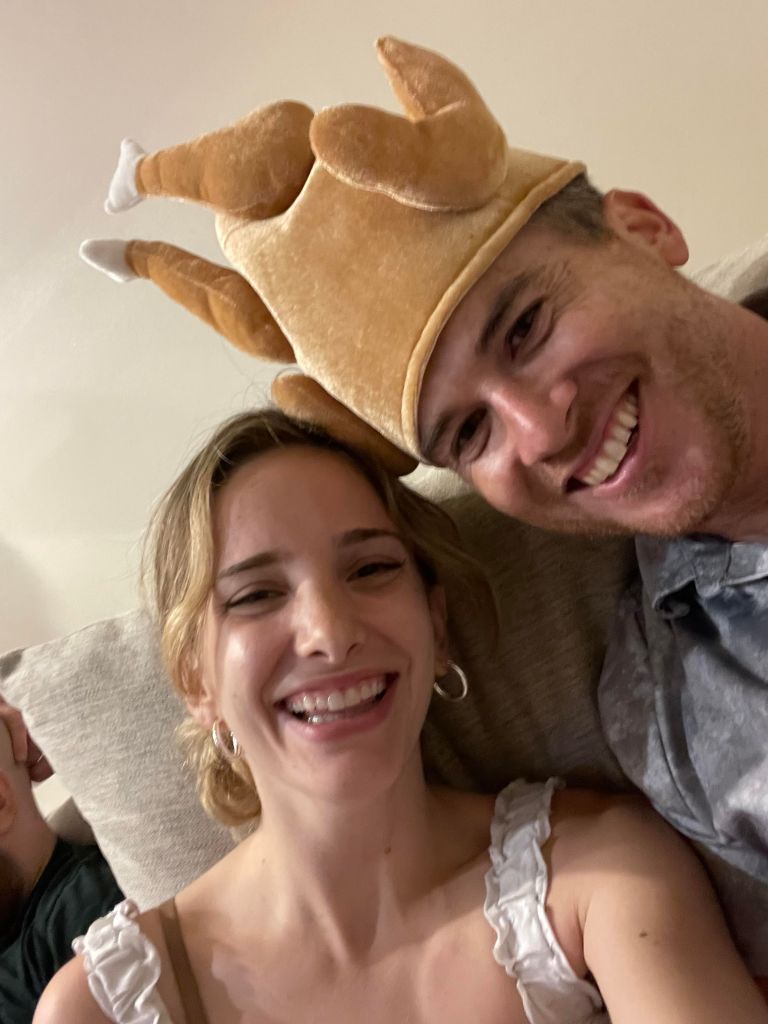
    Exhibit A below:

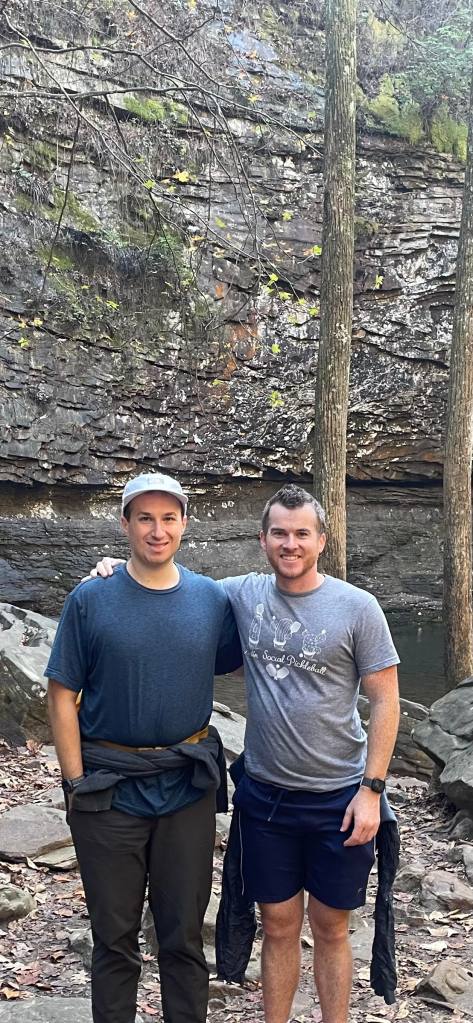
    Life Update: I’ve taken advantage of the fall weather with a weekend hiking group.

    Some people get way too close to the cliff.

  • Peachtree Poetry

    December 1st, 2024

    One of the first things I noticed when I moved to Atlanta was the trees. Atlanta and North Georgia, in general, have these sloping, hilly landscapes punctuated by magnificent trees. Some reach into the sky. Others have wide trunks reminiscent of the Pocahontas Grandmother Willow.

    Therefore, it is a deep irony that instead of following the long-standing convention of naming streets after a variety of different trees, i.e., Elm Street or Magnolia Blvd. They named half of the streets “Peachtree Street.” Not only the roads but also many buildings are named Peachtree, and Peachtree is plastered on a majority of the signage.

    Aside from choosing a tree that lacks the striking silhouette against the skyline that many of the other Georgian trees provide, this naming convention has led to the unfortunate situation that whenever I get in my car, I know I am going somewhere named Peachtree, but I never know where that is.

    Luckily, we live in an advanced age where the GPS on my cell phone is up to the complicated task of finding the correct Peachtree address and guiding me on my way.

    Frankly, I am not surprised the Atlantans of old chose this naming convention. Old cities have a wisdom about them. They understand complex problems are usually more important than complicated problems.

    Complicated problems may be daunting, but they have solutions. With sufficient analysis, you can theoretically find the correct answer.

    For example, dividing 4,392 by 56 without a calculator is complicated. Finding the right move in Chess is super complicated. The GPS finding the correct Peachtree address is almost infinitely complicated. But none of them are complex.

    Complex problems are not wholly solvable. You may solve it one day, but then the next, the opposite problem will pop up in its place. Or you just don’t have, and will never have, enough information to know where to go.

    For instance, treating mental health conditions is usually complex. Along with deciding who to vote for, figuring out who to marry, or deciding whether or not to have kids. 

    If you are deciding whether to quit your stable job and risk it all to follow your passion, a list of pros and cons will only take you so far. 

    For these complex problems, you’d be better off listening to music, reading a classic novel, or sitting under the stars in wonder. You might find something in the complexity of the universe or the complexity of the human heart that you could never calculate from scratch.

    When I started this blog, I thought most of my posts would be data deep dives into the demographics of different places or analytical posts about the inner workings of social networks. Surprisingly, I have found myself more interested in writing about the poetic nature of the journey because I appreciate the complexity of our current moment (And the fact these posts don’t take as much time to write.)

    Older cities understand complexity. 

    When I first moved to Atlanta, I knew there was a big rap scene, so I googled Atlanta’s most famous rappers. It’s basically all the rappers. 

    This is not the part of the blog where I reveal my shocking rap alter ego, but rather, it’s where I admire cities where people come together to create new things and influence the culture. Change the way we deal with the complexity of life.

    It’s cool.

    Life Update: I had a great visit with my college roommate Jordan, who lives a few hours away in Chattanooga—another place with beautiful tree game.

  • Shadow

    November 3rd, 2024

    I have definitely been watching too many horror movies this October. In the spirit of Halloween and to provide a fitting denouement to my previous two posts, I want to discuss Shadow. Despite the creepy imagery the word evokes, it has become a framework used in psychology and therapy.

    Carl Jung was the first to discuss shadow work. Your shadows are the parts of your subconscious that unknowingly influence your life choices.

    For example, you tell yourself you play video games because it’s fun. But subconsciously, you don’t feel heroic enough in everyday life, so you need to get that fix. You give your kid the iPad because it has an educational game for her to play. But, really, she is annoying the crap out of you. You sabatage good relationships because you are attached to imaginary relationships and so on.

    One of the hard lessons kids must learn while growing up is that people have hidden motivations. They say one thing while doing another. It’s not just our own internal world that is dissonant with the external appearance we show off; it’s everyone elses too, which makes dealing with society insane. It’s a complex problem. 

    It’s not just that we misrepresent ourselves to others; worse still, we lack self-awareness of our motives. 

    So goes the inspiration for virtually every horror film. There is something hiding from you. Sabotaging you. Stalking you. And you don’t understand where it came from.

    Every monster, ghost, and ghoul are bursting from some unknown place to make their presence known in the external world. But, Horror films are no exception to my False Dawn post. The external world is a reflection of the internal journey. 

    The monster is hidden in your own subconscious.

    The monster is some part of yourself you don’t want to face. Some hidden belief you don’t want to admit to. Some trauma you are avoiding.

    So, what is the solution? Other than the hero’s journey mumbo jumbo, I incessantly bore my readers with. 

    Shadow work. 

    The process of pulling your subconscious into your conscious. Integrating the parts of yourself, you don’t like, are ashamed of, and are controlling your perception of yourself. Who knows how to deal with it? There are a million ways. But you can’t start dealing with self-sabotage until you acknowledge its existence.

    Using myself as an example, when asked what I am looking for on a date, my refrain goes, “Truth, Beauty, and Goodness.” Along with a short monologue about what those principles mean to me.

    It’s a great elevator pitch, but is it true?

    If I wanted to, I could write down 500 things I look for on a date. Some of them correspond with my principles. Others wouldn’t. Others still, I would be embarrassed to admit.

    That act itself is Shadow work. 

    This gets us back to my last post about our “standard of living” outstripping our standard of living. 

    Human beings are finite creatures with infinite desires. Happiness comes down to our ability to control and prioritize those infinite desires. Try to capture their essence in a thoroughly practical world.

    As Arthur Brooks repeatedly puts it in the podcast, the goal is “moving things from your limbic system to your pre-frontal cortex.” Putting the CEO part of your brain at the wheel and the animal part of your brain in the backseat.

    Your subconscious and emotions are not bad, but there are a lot of traps. Patterns of behaviour that keep you from being the person you want to be that have to be understood at the CEO level.

    But, really I was looking for a way to shoehorn my psychological babblings in a spooky seasonal way. Happy Halloween!

    Life Update:

    The Setting Ducks lost in the championship, further delaying my elusive volleyball title, despite the endless leagues I have played in.

  • Is our “Standard of Living” rising faster than our Standard of Living?

    October 20th, 2024

    Louis CK made a joke titled, “Everything is Amazing, and Nobody is Happy.” He recounts a flight where they announced Wi-Fi would be offered on an experimental basis for the first time. 

    A man pulls out his laptop and gets to work. Thirty minutes into the flight, the Wi-Fi goes out, and the guy says, “What the %$53? This is ^#% *$#!.” A half hour before, the guy did not know Wi-Fi was possible on flights. 

    Now, he is entitled to it forever more. Or so the joke goes… 

    When I went on a mission trip to an isolated rural village in the Dominican Republic when I was 16 years old, it was my first experience of so-called third-world poverty, and it opened me up to a question I have struggled with for the last 16 years. 

    Are all the problems we deal with in the developed world trivial? You know, the famous joke about “first-world problems.” I’m not exaggerating to say that it has been an obsession and has haunted me ever since.

    The simple answer is No. 

    We may not deal with inescapable poverty, constant food/physical insecurity, and the absence of basic healthcare/education/electricity/transportation (and so on), but there are many legitimate problems. There is still cancer, drug addiction, homelessness, gun violence, and domestic/sexual abuse (among many others) that anyone would consider a “problem.”

    Still, in the developed world, more people are more comfortable, live longer, and have more opportunities than people in underdeveloped countries. And it’s by a wide margin. 

    Not only those in underdeveloped countries but what about those who came before us. I don’t know many people who would go back in time, even if it were as a monarch. Kings and Queens of the past lived shorter, more violent, less educated lives than many poor people live today.

    I know what you are saying. “Of course, Connor. Everyone in our society knows this, is super-grateful for all we have, and accepts that we are in a Utopia. Unending, blissful joy abounds.” Ha.

    Obviously not. Expecting people to be that way misunderstands the human brain.

    Our brains are wired to scan the environment for threats, track our relative social position in society, and take what we have for granted. In other words, we are stuck with anxiety, comparing ourselves to others, and entitlement. Regardless of our environment.

    But, the more I think about this problem, it’s actually worse than that.

    In the internet age, we have access to more facts and information than ever before. But, hardly anyone would say we are better informed than before. 

    Confirmation bias is a powerful drug. We choose to look up information that supports our beliefs and ignore information that contradicts them. The internet has supercharged this bias. Making us more uninformed than before.

    If confirmation bias is exploding, maybe some others are too.

    I have had many conversations over the past few years that are just plain bleak. So many people are convinced the world is going to hell, the economy is worse than ever, and the ‘American Dream’ is dead.

    People point to ongoing global wars, elevated housing prices screwing the younger generation, Climate Change, and rising student debt, among other things—all legitimate problems.

    Many see these issues as justification for not having children. How could you bring a child into such a terrible world? Also, very legitimate. It’s a tough and harsh world.

    However, relative to underdeveloped countries and historical life, life has never been as comfortable. Most children born today have so many advantages that others never had. So what is really going on?

    Anxiety, Social Comparison, and Entitlement cognitive distortions likely suffer from the same supercharging from the internet as confirmation bias. Bad news sells. And it’s everpresent. Social Media keeps us comparing ourselves to ridiculous standards of beauty and happiness. We are bombarded by the lifestyles of the rich and famous.

     Despite the increasing comforts, this makes life in the developed world much worse than before. It’s why we are all nostalgic for the 90s.

    Our image of the good life is becoming unmoored from reality. And the gap is accelerating.

    Peter Attia’s excellent podcast with the happiness researcher Arthur Brooks gave me great insight into the solution. Our happiness comes down to limiting our desires to only the most essential. We must reframe our image of the good life to something that is both realistic and beautiful.

    Life Update: My amazing grandmother, Mary Daly, passed away a couple of weeks ago. Her funeral was a powerful celebration of her life. Permit me to share some excerpts of her obituary as she enjoyed reading my blog. Here is a link as well.

    “Mary Hannah Bowler Daly was born in New York, New York, on June 30, 1932, to Michael and Margaret Bowler. She had three siblings who recently predeceased her: Bernadette Lavin, Patricia Frain, and Michael Bowler. She was raised in the Bronx and attended St. John Chrysostom School and Cathedral High School. After graduation, she became a secretary at Deloitte Haskins and Sells in Manhattan. 

    Mary met her husband, John “Jack,” in third grade, but it wasn’t until after she graduated from high school and started working that they became an item. John enlisted in the Navy, and after completing his service commitment, they were married on June 11, 1955. They lived in New York City, Webster, and Rochester in New York and eventually moved to Lanham, Maryland, outside of Washington, D.C. Along the way, they had seven children: John (Lori) Daly, Michael Daly, Robert (June) Daly, William (Kim) Daly, James Daly, Maureen (Jeff) Branham, and Jeanne (David) Smith.

    Mary was an important part of St. Margaret Mary Parish. She and Jack were instrumental in the Parish Retreat Program, the Cursillo movement, and Alpha-Peer Ministry. She volunteered on committees and served in many church ministries. 

    Mary believed in the importance of education. She ensured all her children earned their college degrees, and when her youngest was in third grade, she pursued her own higher education journey. She went to Seminole Community College, now Seminole State, and then out to FTU, now known as UCF. She earned a bachelor’s degree in business and then a master’s degree in counseling and became a Licensed Mental Health Counselor. She worked at BETA and Lakeside Alternatives and eventually had her private practice for over fifteen years.”

  • False Dawn: The Internal vs External Journey

    September 29th, 2024

    A few weeks ago, My brother and I watched CODA (spoilers ahead), the Oscar winner in 2021. I was shocked to find an extremely formulaic film. The Oscars usually reward films that subvert the traditional formula in some artsy way.

    CODA may have followed a familiar storytelling pattern. Still, it hit all the right notes and had me thinking about the fundamentals of a good story: The push and pull between the internal and external world.

    The story follows Ruby—a not-so-popular high school student who is the only member of her family who is not deaf. Her family works a fishing boat for income and depend on her to translate their sign language and navigate the politics of the fishing business.

    But she has a secret. She can sing. Like, really belt it.

    She is unaware of her talent because her family can’t hear her when she sings, and she is generally self-conscious because her family situation delayed her speaking abilities.

    She accidentally stumbles into the school’s choir practice, and the teacher quickly hears her talent. She is signed up to sing a duet with a boy-toy love interest. At first, she is genuinely happy to add a new passion to her life.

    However, good times don’t last. 

    Soon, her family is frustrated because they can’t rely on her during a turbulent time in the fishing business because she is spending time singing. Her love interest betrays her by spreading an embarrassing story about her family. The choir teacher is frustrated by her poor attendance record.

    The tension builds between her increasingly separate lives. Just when it feels unbearable, her love interest convinces her to give him another chance, and they share a beautiful afternoon at the lake. It ends with a kiss on top of a log. 

    As a viewer, I felt that familiar feeling. Relief. This poor girl finally has something go her way. But, I turned to my brother and said, “Something will go horribly wrong in 10..9..8..7..6.” 

    Sure enough, in less than 5 seconds of film time, she comes home to find out her family will have their fishing boat taken away. And it’s her fault.

    This beat in the story is called the ‘False Dawn.’ As a viewer, you want the hero to get some relief. You want the external world to give her something. You are tired of watching her struggle with no end in sight.

    But, deep down, it would be unsatisfying if the good time lasted. If the film ended there, it would be a let down. 

    Why? …Because what we crave in a story is internal change. Internal development. Internal growth. That’s what puts our butts in the seats!

    The external world kicks the hero right in the kiester to get them to start the journey. The hero keeps trying to solve the problem without changing themselves. The external world piles problems on problems. Pushing the hero deeper and deeper. The tension builds. Further and further down. 

    It’s only in the darkest of night that we can no longer ignore it. There will be no quick fix. The external world will never give that to us. We have to change ourselves—the part we hold onto tightest. The part we never thought we could change. The part we are ashamed of.

    Once the hero embraces the change, we are finally ready for the climactic resolution. This is where the hero’s growth transcends the individual and transforms the world. 

    I won’t spoil Ruby’s internal change in this post. But I hope some readers watch the film and try to figure it out.

    My brother asked me if knowing the formula made watching films less enjoyable. While self-awareness can be annoying, it’s no different than knowing that pop songs are usually structured: intro, verse, pre-chorus, chorus, verse, pre-chorus, chorus, bridge, chorus. 

    I love the patterns. And all the details matter anyway. There are infinite ways to arrange the details.

    What does storytelling have to do with our lives anyway? It’s easy to notice that life doesn’t always have a Hollywood ending. Our own stories don’t follow the formula in a consistent or predictable fashion. They zig and zag. Go up when we think they will go down and vice versa. 

    Sometimes, you must ignore all the noise and recognize the most critical pattern of being. 

    It is only through internal change that we can change the world. The external world may be chaotic, but it is just a reflection of the chaos within our souls.

    Life Update: Hurricanes follow me everywhere. It wasn’t too bad in Atlanta; there was just a lot of rain.

    I made a fool of myself on the dance floor at my awesome friend Barbara’s beautiful wedding in Detroit. Hopefully, at least one photo of me embarrassing myself on the dance floor is coming.

1 2 3 4
Next Page→

Blog at WordPress.com.


Loading Comments...
 

    • Subscribe Subscribed
      • The Purpose Driven Date
      • Join 27 other subscribers
      • Already have a WordPress.com account? Log in now.
      • The Purpose Driven Date
      • Subscribe Subscribed
      • Sign up
      • Log in
      • Report this content
      • View site in Reader
      • Manage subscriptions
      • Collapse this bar